
Have you ever seen those flashy ads from internet service providers (ISPs) promising “gigabit speeds” or “ultra-fast downloads” for just a few extra bucks a month? It sounds great, right? Who wouldn’t want lightning-quick internet? But here’s the big myth: higher speeds don’t necessarily mean a better experience for most people. In fact, ISPs often hype up speed as the ultimate selling point, charging more for plans you might not even need. Let’s break this down in simple terms, like explaining it to a friend who’s new to all this tech stuff.
What Do “Speed,” “Bandwidth,” and “Latency” Really Mean?
First, let’s clear up the jargon. When ISPs talk about “speed,” they’re usually referring to bandwidth—how much data can flow through your connection at once, measured in megabits per second (Mbps) or gigabits per second (Gbps). Think of it like the width of a highway: more lanes mean more cars (data) can pass through quickly.
But bandwidth isn’t the whole story. Latency is the delay in how long it takes for data to travel from your device to the internet and back, measured in milliseconds (ms). It’s like the time it takes for a car to get from your house to the store—even if the highway is wide, traffic jams or long distances can make the trip slow. Low latency (under 50-100 ms) makes things feel snappy, like loading web pages, gaming, or video calls. High latency? That’s when you get lag, buffering, or that frustrating “spinning wheel.”
The myth is that buying more bandwidth automatically fixes everything. But data from real-world networks shows that’s not true. For example, studies reveal that latency can bottleneck your experience more than bandwidth, especially for interactive tasks like online gaming or Zoom calls. Speed helps with big downloads, but if latency is high, your “fast” connection still feels sluggish.
The Reality: Most People Don’t Use All That Bandwidth
Here’s where it gets interesting. According to a 2025 report analyzing billions of metrics from ISPs worldwide, the average person uses way less bandwidth than what high-speed plans offer. Fixed wireless users, for instance, only actively use about 8 Mbps on average—even as plans keep getting faster. Download growth has stalled at just 8% year-over-year, while upload is growing faster (20%), but still not maxing out connections.
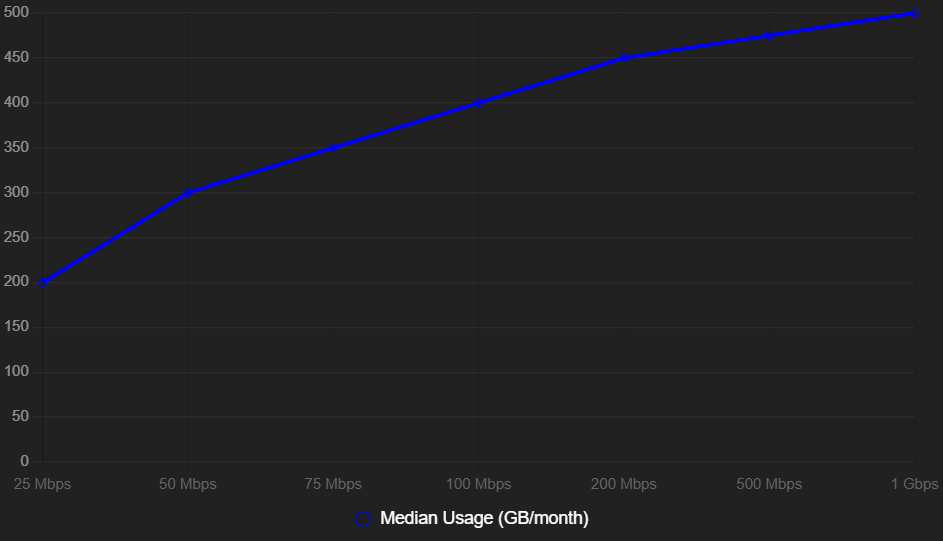
Even more eye-opening: monthly data usage doesn’t skyrocket with faster plans. On plans under 75 Mbps, people are often “constrained”—they’d use more if they could. But above 100 Mbps? Usage flattens out. The median user (half of people) consumes around 400-500 GB per month on 100+ Mbps plans, barely more than on slower ones. Heavy users (top 20%) do consume more, but for most, extra speed just sits idle.
To visualize this, check out this chart showing how data usage plateaus as plan speeds increase:
Grok can make mistakes. Always check original sources.
This data busts the idea that “more speed = more usage.” Streaming 4K video, the biggest data hog, only needs 25-50 Mbps per stream. Beyond that, you’re paying for capacity you rarely touch.
How ISPs Profit from the Myth
ISPs love advertising massive speeds because it’s an easy upsell. Take Comcast or AT&T—they blast ads for “1 Gbps” or “5 Gbps” plans, implying you’ll zoom through the internet like a superhero. But in reality, these plans cost $20-50 more per month, even though most households don’t need them. One ad campaign boasts “blazing-fast speeds for all your devices,” but glosses over latency or reliability issues during peak hours.
Why? Because speed is easy to measure with tools like speed tests, which ISPs optimize for. But real performance? That’s about consistent low latency and no buffering, which requires better network management—not just wider pipes. The report shows latency has stayed steady despite rising demand, thanks to optimizations, but without them, high-speed plans can still lag.
Why Fiber Is the Best Option: Spotlight on 186networks
If you’re shopping for internet, consider the type of connection—not just the speed. Fiber optic, like that offered by providers such as 186networks in Northwestern Lower Michigan, is often the gold standard. Why? Fiber uses light signals through glass cables, delivering super-low latency (often under 10-20 ms) and symmetrical speeds (upload as fast as download, up to 10 Gbps or more). This means smoother gaming, faster uploads for video calls or cloud backups, and less lag overall compared to cable, DSL, or wireless options.
In the report, fiber shines with higher throughput and stable performance, even under load—differences between fiber and wireless vanish when comparing similar speed plans, but fiber edges out in reliability. 186networks’ Slashband Fiber, for example, promises blazing-fast, ultra-low latency that beats local cable services, making it ideal for households with multiple devices.
And if the fiber is buried underground? That’s even better! Underground fiber is protected from weather like storms, ice, or high winds, as well as wildlife, vandalism, or accidental damage (think fallen trees or car accidents hitting poles). It’s about 10 times more reliable than aerial (overhead) fiber, with a longer lifespan of 30-50 years. Sure, it’s pricier to install (digging trenches vs. hanging on poles), but for long-term peace of mind in areas with rough weather, it’s worth it. 186networks prioritizes underground construction for its network design. With the exception of a few areas in and near Whitewater Township, the entire network is built underground.
What Should You Look for in a Good ISP Instead?
Speed shouldn’t be your top metric. Focus on:
- Low Latency: Aim for under 50 ms for smooth gaming and calls. Fiber typically outperforms cable, satellite, and DSL in this area.
- Reliability: Check uptime and peak-hour performance. Does it slow down when everyone’s online? Look for fiber providers like 186networks that emphasize high reliability.
- Quality of Experience (QoE): Read reviews on real-world feel, not just speed tests. Tools like ping measurements matter more.
- Value: A 100-200 Mbps plan is plenty for most homes. Don’t overpay for gigs you won’t use. If fiber’s available, go for it—especially underground for extra durability.
Next time an ISP ad tempts you with “extreme speeds,” remember: it’s often marketing hype. True quality comes from smart network design, not just bigger numbers.
186networks acknowledges this as an ISP, committing to honesty by only suggesting upgrades when customers genuinely need them.